Fashion first – why brand collaborations are hot right now

From Crocs x Pringles to Del Monte x Urban Outfitters, food brands are having a fashion moment. We find out why collabs are so hot right now.
BrandsFeaturesMarketing StrategyNews

Food and drink brands are having something of a fashion moment right now.

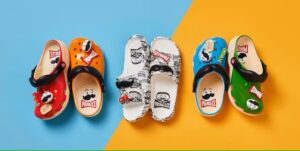
The first clue was when the Crocs x Pringles collaboration made national headlines earlier this year. If you like the look of the snack-themed plastic footwear, you’re too late – the limited-edition run sold out almost immediately.

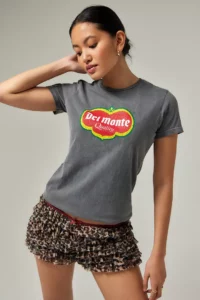
Another unexpected partnership was announced shortly afterwards, when perennially cool high street retailer Urban Outfitters launched a collection of apparel featuring the Del Monte logo.

That’s right – the canned fruit company. Unsurprisingly, it’s a licensing first for the fruity favourite, better known for its tins of pineapples than any sort of sartorial style.

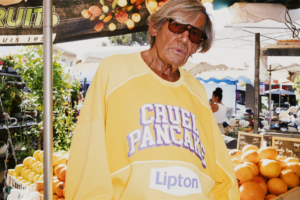
Not to be outdone, soft drink brand Lipton Ice Tea then teamed up with streetwear brand Cruel Pancake for an exclusive 25-piece clothing collection. So what’s going on and – more importantly – why?

Fashion fan favourites

There are many different reasons that brands choose to embark on a licensing partnership.

Del Monte’s exclusive collection is perhaps easier to understand, as it taps into a wider trend for graphic t-shirts, putting the iconic logo front and centre. It’s a which move gives a nostalgic nod to the rich heritage of the brand, while also connecting with both loyal fans and a whole new generation of consumers.
According to Del Monte’s senior marketing director Thierry Montange, the collaboration allowed the brand to celebrate its history and “connect with consumers in a fresh and fashionable way”.

Reaching new audiences is one of the biggest draws of brand licensing, particularly when there’s a natural crossover. More surprising partnerships – such as the Pringles x Crocs collaboration – have an attraction all of their own.

“Licensing for these type of brands is all about allowing the fans of the brand the opportunity to see the brand in a context they aren’t expecting,” said Richard Pink, founder of Pink Key Licensing, which specialises in facilitating food and drink partnerships.

“There is considerable value in seeing the brand out of its traditional channel and in association with cool fashion brands. It reinforces the emotional connection with the consumer and helps cement the brand values in an unexpected channel.”


Subscribe to Marketing Beat for free

Sign up here to get the latest marketing campaigns sent straight to your inbox each morning


While initially developed by the US team, the Crocs x Pringles collab was a global success.

Pink puts this down to a combination of “real quirkiness” while also playing straight into Pringles’ brand values: “it pushed boundaries of the brand but remained squarely rooted in the brand character.”
Summer of (90s) style

Working with Cruel Pancake – a creator-founded streetwear brand by Hugo Philip – Lipton Ice Tea made made its first venture into the world of fashion with ‘That Summer Feeling’.

The 90s-inspired collection has made a big impact, blending Cruel Pancake’s bold designs with Lipton’s refreshing brand identity. It was, the brand said, a nod to the consumer nostalgia for the beverage as a fridge staple during the 90s, as well as its natural association with summer.

“While Lipton Ice Tea is the global leader in its category, like any heritage brand, there’s always the risk of being perceived as outdated in a rapidly evolving market,” said Pepsi Lipton global digital marketing director Victoire Binet.

“To stay relevant, it’s crucial for us to engage with today’s pop culture in a way that feels natural and authentic to our brand’s DNA.”

As part of its bid to appeal to Gen Z audiences, Binet points out that the fashion collection elevates Lipton Ice Tea’s cultural relevance while also helping to position the brand firmly within the lifestyle space.

Working with global creator agency Billion Dollar Boy, Lipton partnered with brand ambassadors as well as hundreds of influencers to “sustain its positioning as a lifestyle brand, grow community engagement and land the campaign message in an authentic way.”

The strategy has worked; since the collection made its debut, Lipton pieces have been in such demand that they are being resold on online marketplace Vinted.

“While we know it will take more than one collaboration to fully move the needle, this is a vital step in increasing our brand’s cultural relevance,” Binet added.

The power of brand

Traditionally, marketing relies on paying to get consumers’ attention through linear channels like advertising or events. But as consumer behaviour evolves, these models are becoming increasingly ineffective.

More useful is meeting consumers where they are — within their own communities and cultural spaces.

“Today, success is not about how much attention you can buy, but how much attention you can earn,” says Binet, adding that the number one metric of brand success now is the “ability to engage consumers in a way that feels organic and valuable to them”.

“This is where brand collaborations come into play. Rather than just partnering with another big brand, we chose to collaborate with a creator-owned brand like Cruel Pancake. It’s a more human, relatable approach that resonates deeply with both of our audiences, making our brand feel more authentic and relevant in their lives.”
So while it’s important to be true to the brand, it’s just as important to consider the new audiences you are looking to reach. So what’s the most important element of a good fashion collaboration?

Pink begins. “A sense of fun is important. But a sense of creativity – to be able to adapt the brand outside of its normal domain and understand that with licensing you can really push some boundaries – is vital.”

Binet’s advice for brands looking to embark on fashion collaborations is to be both strategic and patient – Lipton itself waited more than two years to secure the right partner.

“It’s tempting to jump on every opportunity, but not every collaboration will be the right fit. It’s essential that any collaboration feels organic and aligns with your brand’s identity, rather than being something forced just to follow a trend.”

Find out more about the value of licensing and brand extensions at Brand Licensing Europe – a three-day event which is a veritable who’s-who of some of the world’s most recognisable brands and licensing agencies – taking place 24 – 26 September 2024 at ExCeL London.

Fashion first – why brand collaborations are hot right now

From Crocs x Pringles to Del Monte x Urban Outfitters, food brands are having a fashion moment. We find out why collabs are so hot right now.

Social

BrandsFeaturesMarketing StrategyNews

Social

SUBSCRIBE TO OUR DAILY NEWSLETTER

  • This field is for validation purposes and should be left unchanged.

Most Read

Food and drink brands are having something of a fashion moment right now.

The first clue was when the Crocs x Pringles collaboration made national headlines earlier this year. If you like the look of the snack-themed plastic footwear, you’re too late – the limited-edition run sold out almost immediately.

Another unexpected partnership was announced shortly afterwards, when perennially cool high street retailer Urban Outfitters launched a collection of apparel featuring the Del Monte logo.

That’s right – the canned fruit company. Unsurprisingly, it’s a licensing first for the fruity favourite, better known for its tins of pineapples than any sort of sartorial style.

Not to be outdone, soft drink brand Lipton Ice Tea then teamed up with streetwear brand Cruel Pancake for an exclusive 25-piece clothing collection. So what’s going on and – more importantly – why?

Fashion fan favourites

There are many different reasons that brands choose to embark on a licensing partnership.

Del Monte’s exclusive collection is perhaps easier to understand, as it taps into a wider trend for graphic t-shirts, putting the iconic logo front and centre. It’s a which move gives a nostalgic nod to the rich heritage of the brand, while also connecting with both loyal fans and a whole new generation of consumers.

According to Del Monte’s senior marketing director Thierry Montange, the collaboration allowed the brand to celebrate its history and “connect with consumers in a fresh and fashionable way”.

Reaching new audiences is one of the biggest draws of brand licensing, particularly when there’s a natural crossover. More surprising partnerships – such as the Pringles x Crocs collaboration – have an attraction all of their own.

“Licensing for these type of brands is all about allowing the fans of the brand the opportunity to see the brand in a context they aren’t expecting,” said Richard Pink, founder of Pink Key Licensing, which specialises in facilitating food and drink partnerships.

“There is considerable value in seeing the brand out of its traditional channel and in association with cool fashion brands. It reinforces the emotional connection with the consumer and helps cement the brand values in an unexpected channel.”


Subscribe to Marketing Beat for free

Sign up here to get the latest marketing campaigns sent straight to your inbox each morning


While initially developed by the US team, the Crocs x Pringles collab was a global success.

Pink puts this down to a combination of “real quirkiness” while also playing straight into Pringles’ brand values: “it pushed boundaries of the brand but remained squarely rooted in the brand character.”

Summer of (90s) style

Working with Cruel Pancake – a creator-founded streetwear brand by Hugo Philip – Lipton Ice Tea made made its first venture into the world of fashion with ‘That Summer Feeling’.

The 90s-inspired collection has made a big impact, blending Cruel Pancake’s bold designs with Lipton’s refreshing brand identity. It was, the brand said, a nod to the consumer nostalgia for the beverage as a fridge staple during the 90s, as well as its natural association with summer.

“While Lipton Ice Tea is the global leader in its category, like any heritage brand, there’s always the risk of being perceived as outdated in a rapidly evolving market,” said Pepsi Lipton global digital marketing director Victoire Binet.

“To stay relevant, it’s crucial for us to engage with today’s pop culture in a way that feels natural and authentic to our brand’s DNA.”

As part of its bid to appeal to Gen Z audiences, Binet points out that the fashion collection elevates Lipton Ice Tea’s cultural relevance while also helping to position the brand firmly within the lifestyle space.

Working with global creator agency Billion Dollar Boy, Lipton partnered with brand ambassadors as well as hundreds of influencers to “sustain its positioning as a lifestyle brand, grow community engagement and land the campaign message in an authentic way.”

The strategy has worked; since the collection made its debut, Lipton pieces have been in such demand that they are being resold on online marketplace Vinted.

“While we know it will take more than one collaboration to fully move the needle, this is a vital step in increasing our brand’s cultural relevance,” Binet added.

The power of brand

Traditionally, marketing relies on paying to get consumers’ attention through linear channels like advertising or events. But as consumer behaviour evolves, these models are becoming increasingly ineffective.

More useful is meeting consumers where they are — within their own communities and cultural spaces.

“Today, success is not about how much attention you can buy, but how much attention you can earn,” says Binet, adding that the number one metric of brand success now is the “ability to engage consumers in a way that feels organic and valuable to them”.

“This is where brand collaborations come into play. Rather than just partnering with another big brand, we chose to collaborate with a creator-owned brand like Cruel Pancake. It’s a more human, relatable approach that resonates deeply with both of our audiences, making our brand feel more authentic and relevant in their lives.”

So while it’s important to be true to the brand, it’s just as important to consider the new audiences you are looking to reach. So what’s the most important element of a good fashion collaboration?

Pink begins. “A sense of fun is important. But a sense of creativity – to be able to adapt the brand outside of its normal domain and understand that with licensing you can really push some boundaries – is vital.”

Binet’s advice for brands looking to embark on fashion collaborations is to be both strategic and patient – Lipton itself waited more than two years to secure the right partner.

“It’s tempting to jump on every opportunity, but not every collaboration will be the right fit. It’s essential that any collaboration feels organic and aligns with your brand’s identity, rather than being something forced just to follow a trend.”

Find out more about the value of licensing and brand extensions at Brand Licensing Europe – a three-day event which is a veritable who’s-who of some of the world’s most recognisable brands and licensing agencies – taking place 24 – 26 September 2024 at ExCeL London.
BrandsFeaturesMarketing StrategyNews

Leave a Reply

Your email address will not be published. Required fields are marked *

Fill out this field
Fill out this field
Please enter a valid email address.

RELATED STORIES

Most Read

Latest Feature

Latest Podcast

Menu


Close popup

Please enter the verification code sent to your email: